

When your knee hurts on the stairs, getting out of a chair, or during a short walk, everyday decisions begin to revolve around pain. You may find yourself wondering why discomfort keeps returning and what deserves a closer look.
 One often-overlooked part of that conversation is inflammatory resolution: the active process that helps the body bring an inflammatory response to a close. Specialized pro-resolving mediators, or SPMs, participate in that process. Their biology is compelling, but supplement research requires careful interpretation.
At Johnson Chiropractic Neurology & Nutrition, I encourage a whole-person perspective on persistent knee pain. Here, I will explain what SPMs do, what the research suggests, and why inflammatory resolution is one possible piece of the picture rather than a diagnosis for every painful knee.
Key Takeaways About SPMs and Knee Pain
- Inflammatory resolution is an active biological process involving immune-cell signals, removal of damaged cells, and a return toward tissue balance.
- Specialized pro-resolving mediators include resolvins, protectins, and maresins, signaling molecules formed through pathways involving fatty acids such as EPA and DHA.
- The GAUDI pilot trial reported lower pain scores with SPM-enriched oil, but overall WOMAC scores did not significantly differ between groups.
- The secondary blood analysis explored possible mechanisms; inflammatory biomarker differences between groups were not statistically significant, leaving important questions unanswered.
- Johnson Chiropractic Neurology & Nutrition offers individualized assessment that considers your health history, movement, joint mechanics, and nutrition rather than one supplement alone.
Why Does Inflammation Need an Active Resolution Phase?
Inflammation needs coordinated resolution because returning tissue to balance involves more than the initial protective response fading away. Immune cells must change their activity, damaged material must be cleared, and repair processes must be coordinated.
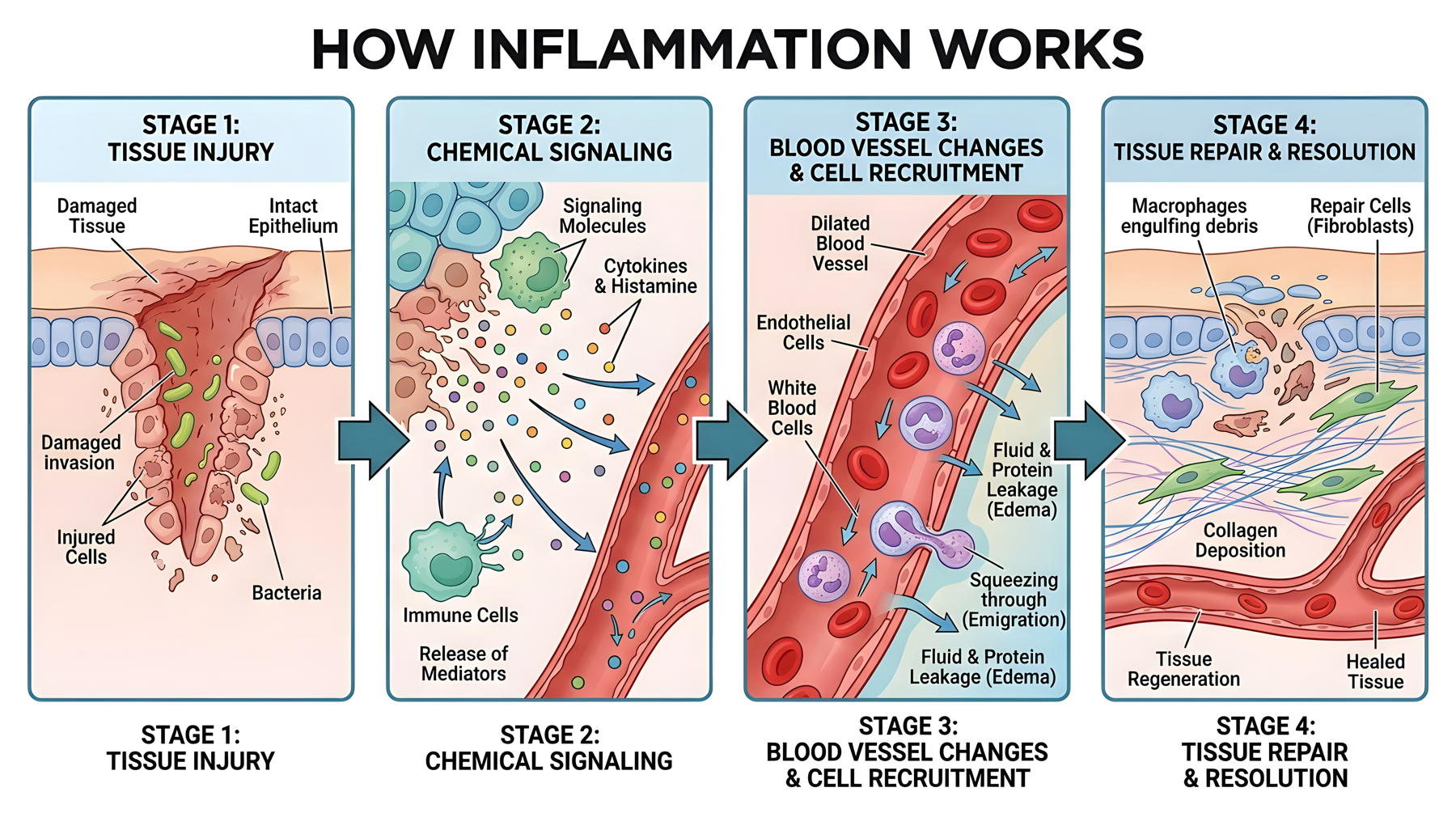
Think of a repair project: responding to the damage and organizing the cleanup are different jobs. The body's inflammatory and resolution pathways overlap, but each contributes distinct signals. This analogy helps explain the process; it does not prove that a particular supplement completes it.
A review of resolution biology describes SPMs as part of an active network that regulates these responses. Understanding that network broadens the conversation about inflammation without establishing why any individual person's knee still hurts. [3]
What Are Specialized Pro-Resolving Mediators?
SPMs are lipid-based signaling molecules that help coordinate inflammatory resolution. Many are produced through pathways involving the omega-3 fatty acids EPA, or eicosapentaenoic acid, and DHA, or docosahexaenoic acid. Other fatty-acid pathways also produce pro-resolving mediators.
The important distinction is between the starting materials and the signals the body makes from them. Having EPA and DHA available does not mean that every downstream resolution process will function identically in every person.
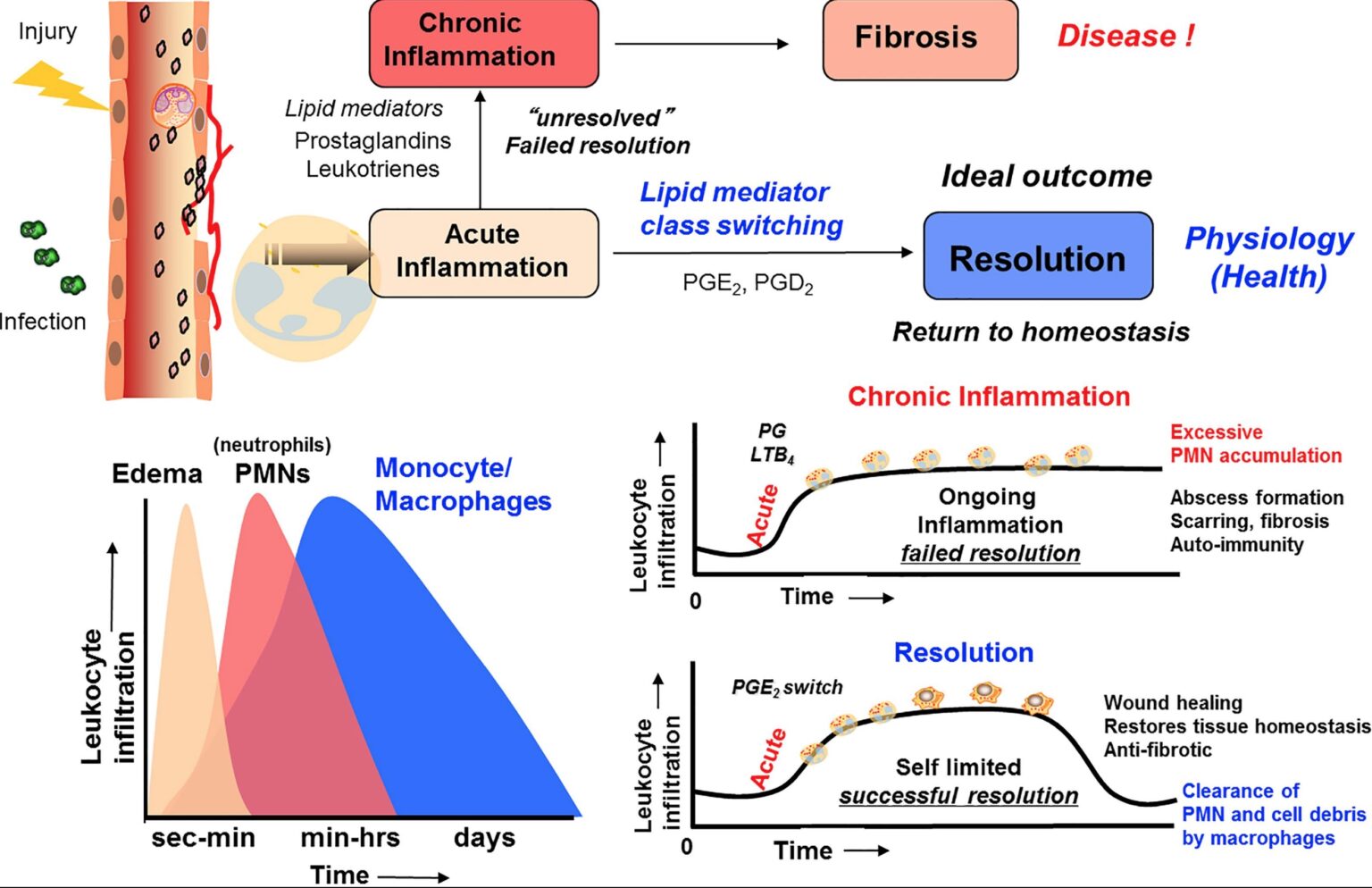
Here is a screenshot from a great Frontiers in Immunology article [4] that sums up the process of resolution of inflammation:
Resolvins, Protectins, and Maresins: Related Signaling Families
Resolvins, protectins, and maresins are families of SPMs studied for their roles in regulating immune responses. EPA contributes to E-series resolvin pathways; DHA contributes to D-series resolvins, protectins, and maresins.
Research describes overlapping actions, including regulation of immune-cell recruitment and support for clearance of dying cells. These families should not be understood as separate products with guaranteed benefits for pain or joint repair. [3]
How Immune Cells Clear Damaged Cells and Debris
Macrophages help clear dying cells and cellular debris by engulfing them. The removal of cells undergoing programmed cell death is called efferocytosis. SPM signaling can promote this cleanup activity in experimental research.
Clearing debris helps create conditions associated with resolution and repair. However, describing this biological role does not establish that an oral supplement rebuilds cartilage, reverses osteoarthritis, or restores a damaged joint. [3]
What Does the GAUDI Knee Osteoarthritis Trial Show?
The 2023 GAUDI pilot trial provides preliminary evidence about SPM-enriched oil in adults with symptomatic knee osteoarthritis. Its randomized, double-blind, placebo-controlled design compared supplementation with an olive-oil placebo over a defined treatment period.
The original GAUDI publication measured several outcomes, including pain intensity, pain patterns, stiffness, physical function, and quality of life. Reading those results separately matters because improvement on one measure does not establish improvement on every measure. [1]
Pain, Function, and Quality-of-Life Findings
The SPM group had significantly lower pain intensity scores than placebo at eight and twelve weeks. The difference in the change from baseline to twelve weeks, however, did not reach statistical significance. That distinction warrants more precise language than simply claiming greater pain reduction.
Overall WOMAC scores, which combine pain, stiffness, and physical function, did not significantly differ between groups. The quality-of-life measure showed significant improvement in usual activities; other dimensions showed favorable trends rather than statistically significant differences.
These mixed findings make the trial promising and preliminary. Its small pilot sample and primary reliance on a per-protocol analysis limit confidence and generalizability. The study did not establish a lasting benefit after supplementation ended. [1]
What Does the 2026 Blood Analysis Add?
The 2026 analysis adds clues about inflammatory signaling, but it is a secondary analysis of blood samples from the same GAUDI trial. It is not an independent clinical trial confirming the earlier results.
The blood plasma analysis found tendencies toward reductions in some inflammatory markers, including IL-1 and IL-18. Between-group inflammatory biomarker differences were not statistically significant. Changes in some markers correlated with changes in symptom or quality-of-life measures. [2]
A correlation can suggest a relationship worth investigating; it cannot establish that supplementation caused symptom improvement through reduced inflammation. The appropriate takeaway is that researchers identified possible mechanisms, not proof that SPM supplementation reliably lowers inflammation in people with knee osteoarthritis.
Are SPM-Enriched Oils the Same as Fish Oil?
SPM-enriched oils and standard fish oils are related, but their composition and research evidence are not interchangeable. Standard fish oil generally supplies EPA and DHA, while enriched marine oils may provide downstream pathway compounds such as 18-HEPE, 17-HDHA, and 14-HDHA.
Those compounds participate in pathways associated with SPM production. A capsule's total oil weight does not tell you how much of each pathway compound it contains. Product composition matters when comparing a supplement with the formulation used in a study.
My broader discussion of nutritional strategies places nutrients within a larger care picture. The GAUDI findings do not establish that every SPM-labeled product has equivalent effects or that enriched oil is superior to ordinary fish oil for your situation.
Why Does Persistent Knee Pain Need Individualized Assessment?
Persistent knee pain needs individualized assessment because inflammatory, mechanical, and pain-processing factors can overlap. Symptoms alone cannot tell you that your body has an SPM deficiency or a failure of inflammatory resolution.

At Johnson Chiropractic Neurology & Nutrition, a whole-person assessment considers your history and relevant structural, neurological, and nutritional factors. The goal is to understand your situation before selecting supportive care.
Relevant questions may involve joint motion, walking patterns, strength, and symptoms involving nearby joints. My article on degenerative meniscal tears discusses another reason knee symptoms deserve careful interpretation.
Your assessment may also consider neurological function and your overall health. No single supplement replaces that investigation, and appropriate referral remains important when your symptoms require additional evaluation.
Could Your Everyday Food Choices Be Part of the Picture?
An individualized anti-inflammatory diet is an important part of my approach to some patients with persistent knee pain. In my practice, I have observed substantial improvement in some painful conditions when patients consistently remove foods identified as problematic for them.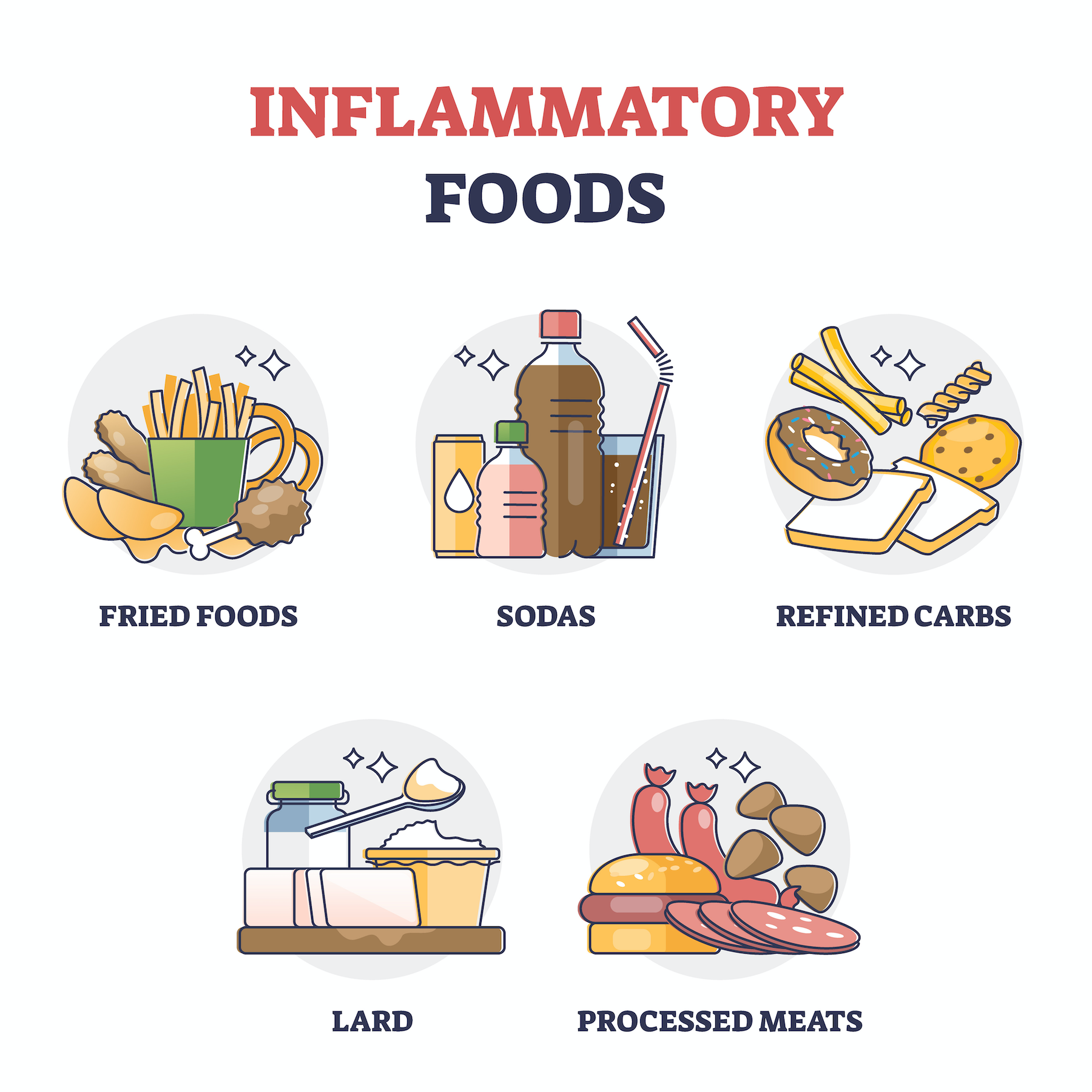
For some chronic knee pain patients, pain has become significantly less intrusive or has resolved while following a broader individualized care plan that includes dietary changes. These are my clinical observations, not controlled-trial findings or a promise that the same diet will produce the same result for you.
That experience is why I look beyond supplements. Supporting resolution pathways and exploring possible ongoing dietary contributors are different questions, and both may deserve attention. Knee pain alone does not establish an autoimmune condition or prove that food is its cause.
Why Individual Food Triggers and Consistency Matter
Identifying foods that are problematic for you requires an individualized approach. I do not assume that every person with knee pain reacts to the same foods. When dietary changes are appropriate, consistency helps us evaluate whether they coincide with meaningful changes in your symptoms.
My earlier article, Control Inflammation Naturally To Thwart Autoimmune Damage And Pain, shares my clinical perspective on food triggers and the importance of considering the whole person.
For practical food-selection ideas, the guest article published on my blog, How To Select Foods To Eat That Help You Heal From Chronic Pain, explores meal choices and individual tolerance. These articles provide background to discuss with your clinician, rather than proof that a specific diet treats knee osteoarthritis.
Make Dietary Changes Purposeful, Nourishing, and Measurable
A dietary trial should have a clear purpose, adequate nutrition, and a plan for reassessment. The goal is to understand your individual response, not to remove more and more foods indefinitely.
- Plan before eliminating: Discuss which foods to evaluate and how to replace their nutrients with suitable alternatives.
- Track what matters: Record food intake alongside knee discomfort, morning stiffness, walking tolerance, and other relevant symptoms.
- Review your response: Work with your clinician or registered dietitian to decide whether to continue, adjust, or reintroduce foods when appropriate. Known food allergies require separate guidance.
Dietary changes complement appropriate assessment and care. Improvement during a dietary trial does not, by itself, prove an autoimmune mechanism or establish which part of a combined care plan produced the benefit.
Put Your Next Step on Your Plate
Ready to turn food choices into a purposeful next step? Purchase my JCNN BodySite Autoimmune Anti-Inflammatory Paleo Diet and bring your dietary approach into the conversation about your health.
If you are unsure whether this approach fits your needs, call 586-731-8840 before starting. Let us discuss how it may fit into your individualized plan, with realistic expectations and attention to nutritional adequacy.
What Should You Discuss Before Starting Supplementation?
Discuss suitability, product composition, and realistic goals with your clinician before starting an SPM-enriched supplement. Bring the product label and a complete list of your current supplements and prescriptions.
- Is the cause of my knee pain sufficiently understood? Ask what has been evaluated and what still requires attention.
- Does this formulation resemble the one studied? Clarify the listed compounds rather than relying on an SPM marketing label.
- Is it appropriate for my health history? Discuss allergies, existing conditions, and possible interactions. GAUDI excluded people with fish or seafood allergies.
- How will we judge whether it helps? Agree on meaningful measures such as walking tolerance, stairs, stiffness, and pain, along with a reassessment plan.
Johnson Chiropractic Neurology & Nutrition provides individualized care options and nutritional guidance. A review of your food choices can complement that discussion without assuming diet or supplementation explains every symptom.
Take the Next Step in Your SPM Conversation
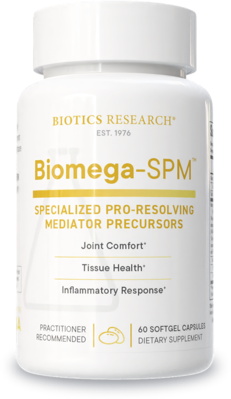
Ready to explore SPM support as part of your personalized plan? If your clinician has confirmed that supplementation is appropriate for you, purchase Biotics Research Biomega-SPM through my Fullscript dispensary.
Have questions before ordering? Call 586-731-8840 to discuss suitability and how supplementation may fit alongside nutrition, movement, and your broader care plan. The GAUDI findings do not establish that this specific product will relieve your knee pain; individual results can vary.
Taking the Next Step Toward Understanding Your Knee Pain
Your next step is a careful assessment rather than assuming SPM supplementation is the answer. The research invites better questions about inflammatory resolution while reminding us how much remains uncertain.

What part of your persistent knee pain deserves a closer look? Call our office at 586-731-8840 to schedule an appointment and discuss an individualized approach.
Please share this article with someone searching for a better understanding of persistent joint pain.
If you’d like to understand more about the natural, whole-person approach that guides my work, I invite you to explore what makes my philosophy of care unique.
Always remember one of my guiding principles: the more you understand how your body works, the better you can care for yourself and support your long-term health.
For a deeper look at the natural, whole-person approach I use with my patients, you may enjoy my book, Reclaim Your Life: Your Guide To Revealing Your Body’s Life-Changing Secrets For Renewed Health. It is available in my office, on Amazon, and through many other booksellers.
If this article was helpful, please use the social sharing icons at the top of the post and share it with those who are still living with chronic health challenges despite medical management. Together, we can reach more people and help them regain their enthusiasm for living. Thank you.
ALL THE BEST – DR. KARL R.O.S. JOHNSON, DC – DIGGING DEEPER TO FIND SOLUTIONS
Frequently Asked Questions About SPMs and Knee Pain
Does Persistent Knee Pain Mean I Lack SPMs?
No. Persistent knee pain does not diagnose low SPM levels or impaired resolution. Several factors can contribute to symptoms. Johnson Chiropractic Neurology & Nutrition considers your health history, movement, and nutrition to develop a more complete understanding of your situation.
Can SPM Supplements Rebuild Knee Cartilage?
The GAUDI studies do not establish cartilage regrowth from SPM-enriched supplementation. Research into resolution signaling should not be confused with evidence that an oral supplement reverses joint damage. Johnson Chiropractic Neurology & Nutrition frames nutritional support within individualized care rather than promises of joint restoration.
How Quickly Should I Expect SPMs to Help?
A reliable personal response time has not been established. GAUDI observed lower pain scores at eight and twelve weeks, but that does not predict your response. Johnson Chiropractic Neurology & Nutrition can help you identify practical goals and determine when reassessment is appropriate.
Did the Blood Analysis Prove Inflammation Was Reduced?
No. The 2026 secondary analysis found trends and correlations, but inflammatory biomarker differences between groups were not statistically significant. The results help generate research questions; they do not establish reliable inflammation reduction or identify a supplement as the explanation for an individual's improvement.
References
- Möller I, Rodas G, Villalón JM, et al. Randomized, double-blind, placebo-controlled study to evaluate the effect of treatment with an SPMs-enriched oil on chronic pain and inflammation, functionality, and quality of life in patients with symptomatic knee osteoarthritis: GAUDI study. Journal of Translational Medicine. 2023;21:423. doi:10.1186/s12967-023-04283-4. Linked in the GAUDI section above.
- Möller I, Rodas G, Villalón JM, et al. Specialized pro-resolving mediator (SPM)-enriched supplementation modulates inflammatory biomarkers in patients with symptomatic knee osteoarthritis: Blood plasma analysis from the GAUDI study. Prostaglandins, Leukotrienes and Essential Fatty Acids. 2026. Article 102758. doi:10.1016/j.plefa.2026.102758. Linked in the blood-analysis section above.
- Chiang N, Serhan CN. Specialized pro-resolving mediator network: an update on production and actions. Essays in Biochemistry. 2020;64(3):443–462. Full text linked in the inflammatory-resolution section above.
- Hansen TV, Vik A and Serhan CN (2019) The Protectin Family of Specialized Pro-resolving Mediators: Potent Immunoresolvents Enabling Innovative Approaches to Target Obesity and Diabetes. Front. Pharmacol. 9:1582. doi: 10.3389/fphar.2018.01582