<img height="1" width="1" alt="" style="display:none" src="https://www.facebook.com/tr?id=392500470927340&amp;ev=PixelInitialized">

Dr. Karl R.O.S. Johnson's Chronic Condition Natural Treatment Blog

Intentional musings of a unique Shelby Township Michigan Chiropractic Physician dedicated to helping people find solutions to improving their health by rooting out causes to chronic conditions such as fibromyalgia, stubborn thyroid disorder symptoms, balance disorders, chronic knee & shoulder pain, migraines, sciatica, ADD/ADHD/ASD, back pain, peripheral neuropathy, gluten sensitivity and autoimmune disorders so they can Reclaim Their Life!

From the Desk of Dr. Karl R.O.S. Johnson, DC.....

The Importance of Nutrition on Weight Loss and Hypothyroidism

Posted by Dr. Karl R.O.S. Johnson, DC on Sat, Jun 09, 2012

Below is a list of various nutrients that affect a person's ability to gain or lose weight.

  • Zinc - reduces leptin, a beneficial hormone that regulates appetite, which is reversed by zinc repletion.
  • Asparagine - this amino acid increases insulin sensitivity which helps the body store energy in muscle instead of storing it as body fat.
  • Biotin - boosts metabolism by improving glycemic control (stabilizes blood sugar) and lowering insulin, a hormone that promotes fat formation.
  • Carnitine - carries fatty acids into cell so they can be burned for fuel; Helps reduce visceral adiposity (belly fat).
  • Calcium - inhibits the formation of fat cells; Also helps oxidize (burn) fat cells.
  • Lipoic Acid - improves glucose uptake into cells, which helps a person burn carbohydrates more efficiently.
  • Chromium - makes the body more sensitive to insulin, helping to reduce body fat and increase lean muscle.
  • Vitamin B5 - taking B5 lowers body weight by activating lipoprotein lipase, an enzyme that burns fat cells. One study linked B5 supplementation to less hunger when dieting.
  • Magnesium - low magnesium in cells impairs a person’s ability to use glucose for fuel, instead storing it as fat; Correcting a magnesium deficiency stimulates metabolism by increasing insulin sensitivity. Magnesium may also inhibit fat absorption.
  • Glutamine - reduces fat mass by improving glucose uptake into muscle.
  • Cysteine - supplementation with this antioxidant reduced body fat in obese patients.
  • Inositol - supplementation may increase adiponectin levels.
  • Vitamin B3 (niacin) - treatment with B3 increases adiponectin, a weight-loss hormone secreted by fat cells; Niacin-bound chromium supplements helped reduced body weight in clinical trials.
  • Vitamin A - enhances expression of genes that reduce a person’s tendency to store food as fat; Reduces the size of fat cells.
  • Vitamin E - inhibits pre-fat cells from changing into mature fat cells, thus reducing body fat.
  • Vitamin D - deficiency strongly linked to poor metabolism of carbohydrates; Genes that are regulated by vitamin D may alter the way fat cells form in some people.
  • Vitamin K - poor vitamin K status linked to excess fat tissue; Vitamin K helps metabolize sugars.
Read More

Topics: zinc, Carnitine, Magnesium, Weight Loss, Hypothyroidism, biotin, Vitamin D, B Vitamins, Calcium, Vitamin E, Chromium, Glutamine, Asparagine, Vitamin A, Vitamin K, Cysteine, Weight Gain, Lipoic Acid, Inositol

"Normal" Thyroid Labs With Symptoms Of Hypothyroidism

Posted by Dr. Karl R.O.S. Johnson, DC on Mon, Jun 04, 2012

Have you been told your two main thyroid blood markers (TSH and T4) are normal, yet you suffer with suffer with a laundry list of thyroid symptoms? This scenario is extremly common. It makes you wonder if you truly have a thyroid problem.

Read More

Topics: Hypothyroidism, Dr. Karl R.O.S. Johnson DC, TSH, T4, LGS, thyroid hormones, stress, leaky gut syndrome, LPS

Why TSH Thyroid Test Can Be Misleading When You Are Told It's Normal

Posted by Dr. Karl R.O.S. Johnson, DC on Thu, May 24, 2012

For some time, I have presented my highly acclaimed Natural Thyroid Solutions Workshop. What do you think the most common reason prompting attendees to attend my workshop? They are upset they have many, many thyroid symptoms and yet their thyroid tests are normal!

Read More

Topics: Hypothyroidism, autoimmune, Hashimoto's, TSH, Thyroid Tests

Hashimoto’s Thyroiditis Can Affect Quality of Life Even When Thyroid Gland Function Is Normal

Posted by Dr. Karl R.O.S. Johnson, DC on Sat, Jan 21, 2012

Often information comes along that needs to be passed on.  This article from Science Daily is an example of that information.  This research paper explains a phenomenon that clinicians such as myself have observed for a long time.  I get dozens of requests for information monthly from thyroid symptoms sufferers, whose tests are "normal". 

Read More

Topics: Hypothyroidism, thyroid symptoms, thyroid, autoimmune thyroid, Hashimoto's diease

The Link Between Celiac Disease and AutoImmune Thyroid Disease

Posted by Dr. Karl R.O.S. Johnson, DC on Fri, Aug 12, 2011

The Link Between Celiac Disease and Autoimmune Thyroid Disease

More and more patients are presenting with the symptoms of Celiac disease—loose and greasy bowel movements, abdominal or full-body discomfort, fatigue…but it’s only now that we’re beginning to discover the true nature of this intestinal autoimmune disorder, as well as its pivotal relationship with fibromyalgia and thyroid complications.

Interestingly, scientific research is pointing to the abnormal formation and residence of certain types of intestinal bacteria as a significant contributor to Celiac disease, fibromyalgia and thyroid disease. Normally, the presence of such bacteria in the digestive system is harmless…in fact, their contribution to digestive breakdown is often beneficial.  However, common intestinal bacteria also are known to produce a wide variety of toxins (bacterial lipopolysaccharides for example) and carcinogens that the body has a more difficult time excreting.  When this happens, the body begins to develop a negative autoimmune response to these internal pollutants, often opening the door for the onset of Celiac disease or various other autoimmune disorders such as Hashimoto's.

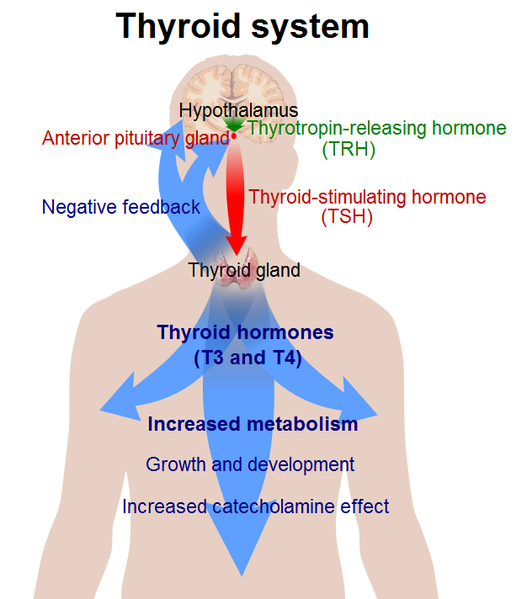
As you may know, the thyroid is a small gland located in the anterior portion of the lower neck and is responsible for the creation and distribution of metabolic hormones. When the thyroid is underproducing or underexcreting, the result is hypothyroidism. Sufferers of this condition often deal with fatigue, cold intolerance and weight gain.  The contrary issue is an overactive thyroid, with symptoms ranging from heat sensitivity and excessive sweating to nervousness, fidgeting and weight loss. This condition is called hyperthyroidism. Both of these thyroid malfunctions may be the result of Celiac disease (also known as gluten intolerance).

I've often explained to patients and audiences about the fact that the contents of the gut are outside the body? The gut is a hollow tube that passes from the mouth to the anus. Anything that goes in the mouth and isn’t digested will pass right out the other end. This is, in fact, one of the most important functions of the gut: to prevent foreign substances from entering the body.

An additional important function of the gut is to host 70% of the immune tissue in the body. This portion of the immune system is collectively referred to as GALT, or gut-associated lymphoid tissue. The GALT comprises several types of lymphoid tissues that store immune cells, such as T & B lymphocytes, that carry out attacks and produce antibodies against antigens, molecules recognized by the immune system as potential threats.  Common antigens in sensitive individuals are bacterial lipopolysaccharides (LPS), gluten and other undigested proteins that enter the blood stream through the "leaky gut"

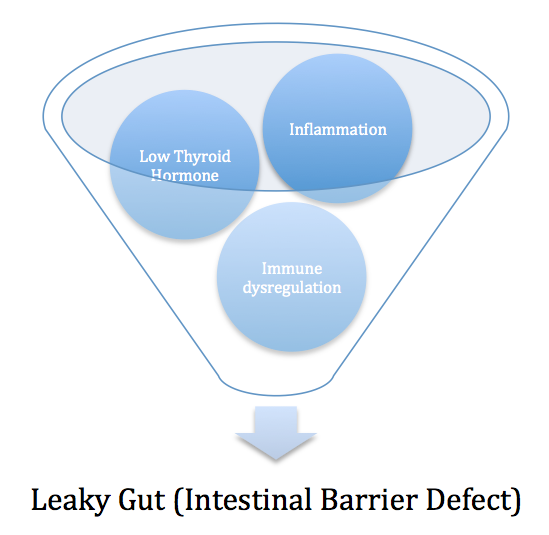
Problems occur when either of these protective functions of the gut are compromised. When the intestinal barrier becomes permeable (i.e. “leaky gut syndrome”), large protein molecules escape into the bloodstream. Since these proteins don’t belong outside of the gut, the body mounts an immune response and attacks them. Studies show that these attacks play a role in the development of autoimmune diseases like Hashimoto’s.

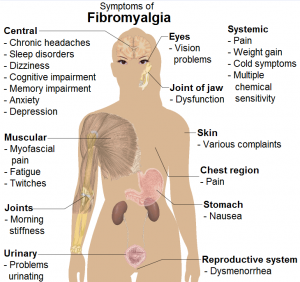
As these processes continue to take place in the body, the more likely it is that Celiac and thyroid disease sufferers are further punished by longer-term effects that the diseases have on their bodies. As less and less nutrients are digested because of the amplified auto immune response, symptoms of fibromyalgia (i.e. chronic pain and widespread fatigue) may begin to set in.  Fibromyalgia is often a misunderstood diagnosis, and there are widespread theories as to its root cause. However, evidence continues to mount proving that Celiac disease/gluten intolerance is a major culprit in interrupting some of the body’s major digestive and metabolic functions.  Fortunately, due to recent advances in testing, Johnson Chiropractic Neurology & Nutrition in Shelby Township, Michigan has the ability to test for leaky gut and sensitivity to gluten and other epitopes so months and years are not wasted looking for the reason for your suffering.

 Click me

Celiac Disease: A Precursor to Fibromyalgia and Thyroid Dysfunction

So what do we know for sure? As early as 2003, the Celiac Disease Center at the University of Chicago reported some startling numbers regarding the prevalence of Celiac disease in America. A fact sheet distributed by the center made the claim that Celiac disease affects approximately one percent of healthy, average Americans. That means as many as 3 million people in the United States are living with Celiac disease. Of those 3 million, more than 90 percent of sufferers remain undiagnosed, attributing their chronic pain, intestinal irritability and bowel issues to something other than Celiac disease, fibromyalgia or thyroid maladies.

Luckily, several advancements in these specific areas of digestive medicine have been made, and a variety of treatment and testing options are now available to those who want to address their pain. In today’s world, patients are required to take charge of their own health. Only with the guidance, support and knowledge of a medical team that understands the underlying issues can patients truly begin to experience the benefits of modern medicine. Johnson Chiropractic, Neurology & Nutrition can guide you to a new existence—one in which the sting of fibromyalgia and thyroid issues can be addressed or eliminated by first conquering what may be undiagnosed Celiac disease and the issues that so often accompany it.

Call us today and take your life back from the discomfort and distress of Celiac disease, fibromyalgia and thyroid complications.

 
Download Free Thyroid Report
Read More

Topics: Hypothyroidism, Dr. Karl R.O.S. Johnson DC, fibromyalgia, thyroid, celiac disease, autoimmune thyroid, leaky gut syndrome, fatigue, Hashimoto's diease

Chronic Fatigue, Pain, Mood Swings and Brain Fog - Fix Me!

Posted by Dr. Karl R.O.S. Johnson, DC on Sun, Aug 07, 2011

I’ve gotten emails and correspondence from patients who tell me they have an incredibly hard time relaxing due to pain and/or stress.  Some wandered aimlessly throughout the house experiencing pain and chronic fatigue while others have mood swings and brain fog.

Read More

Topics: Hypothyroidism, Dr Karl Johnson, gluten, fibromyalgia, fatigue, fibromyalgia treatment

How to Minimize Autoimmune Damage with Hashimoto's

Posted by Dr. Karl R.O.S. Johnson, DC on Sun, Jul 10, 2011

I often get emails and phone calls from patients and potential patients regarding how we help those who suffer with Hashimoto's. 

Read More

Topics: Hypothyroidism, Dr Karl Johnson, autoimmune, Hashimoto's, autoimmune thyroid

STAY INFORMED - Sign Up For Dr. Johnson's Blog Updates

I Could Use Some Help With My Health

Call Dr. Johnson

586-731-8840

Follow Me

Latests Posts

Most Popular Posts

Reclaim Your Life Book 3D Reflect